
The Repression of the Unnaturalness of Agricultural Methods Shaped the Worldview of Human Civilisation

Nothing else has shaped the collective worldview of human civilisation more than the mental efforts to repress the unnaturalness of artificial selective breeding and the resulting permanent subjugation of other living beings. Whether in religions, philosophies or today’s mass media, efforts to obscure and reinterpret the natural order and the effects of our own actions that run counter to it have always been dominant themes. This was the case, for example, when for thousands of years people worshipped a god who supposedly commanded the subjugation and domination of other life forms. Or when those philosophers were particularly favoured who awarded humans an exclusive capacity for freedom that supposedly did not exist in other living beings. Among many other consequences were severe restrictions on the natural sciences, in which large parts of observable reality remained excluded. Today, the mechanisms of repression can also be seen particularly clearly and directly in the major mass media of the internet.
There must therefore have been historically strong subliminal perceptions of the unnaturalness of agricultural methods and resulting unpleasant feelings. And these must have been so unpleasant that people preferred to repress them under the surface of conscious perception by distorting natural reality. The price for this was high. For as a result, only a mutilated and distorted world view could emerge. The natural sciences remained severely underdeveloped – both in terms of understanding the most important physical relationships in ecological structures and the fundamental pattern of an evolutionary dead end situation in civilisational agriculture. The websites of widely used mass media outlets reveal that the damage caused by this repression complex is greater today than in past centuries and millennia – at a time when agricultural methods are being escalated as never before.
AN IMPORTANT PRELIMINARY QUESTION for understanding the background of the cognitive and psychological mechanisms of repression discussed here is that of deep motives. Basically, it can be assumed that strong emotions play a role, as they significantly control the behavior of all animals. Among the particularly strong emotions in social animal species are “guilty conscience” and the protective instinct. Their evolutionary origin is always primarily aimed at stabilizing the own social structure, because this is the basis of individual existence and, even more so, the sustainable continuation of the genetic information. For example, when an ant bites an attacker that is many times larger than itself and threatens the nest of its population and thus its own genetic offspring, even though it is highly likely to die, these ancient, very strong emotions are at work.
In the repression complex analyzed here, strong emotions of a “guilty conscience” and an unfulfilled protective instinct do indeed play an essential role – not, however, in relation to the manipulated and subjugated organisms, but in relation to the own social structure and its future generations. The following metaphor illustrates these processes: A social structure once began to build a large house that was intended to provide lasting protection and security for future generations (= agricultural methods, agriculture). When the children and grandchildren have been living in it for many generations and could no longer exist outside it, the realization grows that the building was constructed on an unstable foundation and will one day collapse, along with the descendants living in it. Since there seems to be no way out of the situation, a strong cognitive dissonance arises, accompanied by very painful tensions. This is now actually a “guilty conscience” – namely towards one’s own genetic descendants. In order to reduce the agonizing tensions, no search is made for possible solutions to defuse the situation. Instead, people close their eyes to reality, “save” themselves by ignoring and reinterpreting the real situation in various ways, and leave their descendants to their fate.
It was therefore no coincidence that the very first pages of the Old Testament and the Bible repeatedly stated that an almighty God had commanded man to subdue the earth and rule over all animals. Nor was it a coincidence that the core of the philosophical “Enlightenment” in Europe was that only humans could be in a state of freedom, but not other living beings, because this allegedly required the basis of an “exclusive reason”, which was said to be inherent only in humans. And finally, it is no coincidence that today’s most widely used media ignore the now unprecedented extremes of unnatural practices such as industrialized factory farming, while at the same time attempting to make nature appear as cruel as possible and, in addition, using images of “cute” animals in the protective care of humans to make them appear particularly “good.”
These and many other distortions and shifts in reality form a complex whole that has prevented the intellectual potential of human civilization from being used to recognize the real situation. This includes the academic natural sciences, which were therefore only able to delve into details regarding animate matter, while the larger contexts and laws of physical life and its ecological orders remained largely untouchable for them.
The general consequences of repression are like driving at full throttle with blocked vision
The current consequences of the efforts to repress the unnaturalness of artificial breeding and permanently subjugation of other living beings can be compared, as a further metaphor, to the situation of a fully occupied bus whose driver, to the loud applause and cheering of the passengers, pulls the sun visor all the way down so that he can no longer see where he is driving, and at the same time presses the accelerator pedal with full force. He and the passengers thus shut themselves off from reality and at the same time accelerate their journey into the inevitable catastrophe that will result. On the short distance that the bus still travels before crashing somewhere, it leaves a trail of destruction in its path.
In this metaphor, the driver represents the sum of all people who actively participate in shaping the worldview and thus also the behavior of humanity in some way. However, these people should by no means be regarded as pure manipulators who lead innocent masses into the abyss. Rather, in large parts of this process, it was and still is these masses themselves who demanded and continue to demand exactly what the shapers of the worldview then produced on their behalf, so to speak. Those who responded well to these demands, whether as authors of religious or philosophical writings, as other book authors, or as editors-in-chief of magazines, behaved in a popular manner and were rewarded with popularity, attention, and customers.
The masses want to hear something that pushes the subconsciously perceived contradiction between the artificial breeding and subjugation of other life forms compared to the central regularities of real nature beneath the surface of open consciousness. The pattern is similar to that of trying to hold an air-filled ball under the surface of the water in a swimming pool: while much of the body’s strength is expended in doing so, the ball still pushes upward with unrelenting pressure. If the attempt is not stopped, the body’s strength will eventually be exhausted. It will consequently sink and die. In the repression at issue here, however, it is not physical strength that is wasted, but the intellectual and cognitive capacities of humanity.
The main purpose of civilisational religions was to elevate humans excessively and conceal the unnaturalness of subjugating other living beings
Even the earliest successful religious foundations and spiritual concepts of Neolithic cultures initially included two central mechanisms of repression: On the one hand, humans were portrayed as so special and noble that their unnaturalness towards the creatures they subjugated no longer seemed relevant. And on the other hand, to make agriculture appear to be the result of divine instructions or cosmic orders through various constructed narratives.
In ancient Mesopotamia, even before the emergence of the Abrahamic religions, stories were shared in which gods commanded agriculture. In ancient Egypt, on the other hand, the “Ma’at” upheld by the pharaohs ensured that agriculture was part of the cosmic order. The Daoist and Confucian concepts of Chinese cultures also stipulated that humans must “cultivate nature.” And on the Indian subcontinent, agricultural methods were declared a duty (dharma) in the form of an agrarian order (varna system).
These mechanisms are particularly obvious in monotheistic religions that use the Bible as their central narrative, which remains by far the most successful in Europe and the Americas to this day. There, right from the very first pages of the Bible, an almighty God is claimed to have first created the world and then man in his own image, and finally expressly tasked him with subjugating the earth. It is even stated several times in succession on this very first pages that this God explicitly demanded dominion over all other animals. This is written in the chapter Genesis of the first book of Moses in the Old Testament and, consequently, also in the first chapter of the Bible.
The text on these first three pages of the world’s No. 1 bestseller on civilization is probably – also due to its dissemination through European colonialism – by far the most widely read in the entire history of civilization. The fact that it is precisely here that extreme self-aggrandizement and the alleged command of God are repeated several times in succession clearly reveals the central aspiration. The many other stories, metaphors, and words of wisdom collected in the subsequent parts of the Bible—some of which are helpful for social interaction—did not play such an important role. This is because the first pages of a book are usually the most widely read. Above all, however, the function of this first chapter is clearly to set a fixed framework for the assumed worldview, while everything else takes place within this framework.
The recipe for the most successful bestseller in the history of civilization is therefore easy to see through. It consisted of extreme elevation of humans while simultaneously legitimizing and thus suppressing their unnaturalness through permanent subjugation of other living beings. For this reason, in the early stages of its spread, no external pressure was probably needed to convince people to accept this worldview.
If, for example, one imagines a high-ranking Roman of the first centuries of the common era, reclining on a couch with a glass of wine in his hand, reading for the first time the beginning of this great story about his own similarity to God, then it is easy to understand why he too quickly jumped on board. And so it came that Christianity, after initially being persecuted, was declared the official state religion of the Roman Empire in the year 380.
It is also easy to understand the immense anger that must have built up later against so-called witches when they questioned this story, then even worshipped real nature and defiled the godlike uniqueness of human beings. What happened was like drilling into collective repression, which could be compared to poking around in an unanesthetized tooth nerve. In retrospect, it is logical that hysterical mobs formed to put an end to such things by force.
The philosophers of the supposed European ‘Enlightenment’ were like relay runners succeeding religion – the new artisans of repression
From the 16th century onwards, the new printing technology in powerful Europe brought pressure to the first pages of the Bible, which had been so successful to help people to repress their own unnaturalness for more than thousand years. The story was just too simplistic, as more and more scientific findings came to light and were shared. Now the collective subconsciously demanded a stable replacement, so to speak. And this task now fell to the philosophers.
Here, too, it is no coincidence that it was precisely those representatives of the guild who were particularly eager to elevate humans and lower other living beings who were most successful. Above all, however, it was those who managed to rephrase the former story of the divine command to subjugate and dominate other living beings – and once again especially other animals – into a concept that could even withstand the pressure of increasing scientific knowledge.
For this reason, philosophers made freedom the linchpin of all their work – in the form of creating explanations that appeared as conclusive as possible, according to which only humans could truly be in a state of freedom, but not other living beings. The famous philosopher Johann Gottlieb Fichte (1762-1814) once indirectly recognised this himself and wrote that the entire European philosophy was ‘nothing other’ than an ‘analysis of the concept of freedom’.
However, it would have been more accurate to speak not of an ‘analysis’ but of a “distortion” or ‘twisting’. For the philosophers of the ‘Enlightenment’ were in fact largely concerned with using the tool of words to cobble together concepts that appeared as credible as possible, according to which only humans could be in a state of freedom, but all other living beings could not.
One of the first superstars of the philosophical ‘Enlightenment’ of that time was René Descartes, born on 31 March 1596. He was like a first relay runner to take over the former main task of the Christian religion. His career was even kick-started by a high-ranking and influential representative of the Catholic Church, Cardinal Pierre de Bérulle, after he had presented his concepts to him.
From the outset, Descartes was a genuine psychopath in several respects and was therefore ideally suited to designing a new psychopathic worldview that was now needed. Among his rapidly popularising explanations was, for example, that other animals, in complete contrast to humans, had no real feelings. And he ‘proved’ this by tying up various animals in front of audiences, then slowly dissecting them and ‘explaining’ that their cries were exactly the same as the squeaking of an un-oiled machine. With the machine comparison, the question of the freedom of non-human beings became already obsolete. For a machine cannot be free.
The invented „exclusive reason“ of humans had exactly the same functions as the invented command of God
Descartes also focused on the concept of an allegedly ‘exclusive reason’ of humans, thereby placing them far above other living beings, as a decisive prerequisite for freedom. This was not new in itself; its roots go back to some of the philosophical schools of the ancient Greeks around 3000 years ago. Nevertheless, it was the German philosopher Immanuel Kant, born on 22 April 1724, who helped this idea achieve such popularity that it has practically survived to the present day. Even today, many people still assume that it has somehow been ‘proven’ that only humans possess genuine and special ‘reason’, while other animals act solely on instinct, and that it is precisely this exclusivity that can be the only true of freedom.
However, these people cannot really explain this. Kant’s explanations contain so many intellectual inconsistencies that their meaning cannot be fully understood. Upon closer reflection, much of it simply turns out to be nonsense. There has never been any empirical evidence for ‘exclusive reason,’ and there still isn’t any today. Rather, the whole concept was obviously a deliberate construct designed just like the religious story of Genesis at the beginning of the Bible, and the purpose was exactly the same: namely, to be able to repress the perception of one’s own unnaturalness, which runs counter to natural regularities, through self-aggrandisement and the legitimisation of the permanent subjugation of other living beings.
Incidentally, it is well documented empirically that the entire range of human actions, reactions and cognitive processes, whether running, laughing, getting angry or happy, loving or lying, are based no less fundamentally on evolutionarily developed and thus innate patterns than is the case with all other animals. True reason in the logical sense of the word can be nothing other than the cognitive production of the best possible decisions and actions for sustainable existence. And it is precisely in this regard that modern humans, with the destruction of their own livelihoods and orientation against fundamental natural laws, prove that, despite the high capacity for abstraction available to them thanks to their large ‘hard drive’ of the neocortex, they obviously have only a relatively weakly developed reason.
Mechanisms of repression in the natural sciences sometimes resemble those of religions
The mechanisms of collective repression outlined so far, and many others, form an interwoven network that extends across all areas of civilization. One of these concerns the natural sciences. Their structures and priorities have historically been significantly determined and shaped by the repression complex. The fact that such important laws as the Law of Evolutionary Stability and the regularity of physical degrees of freedom in living systems have not been included in physics as the “premier league” and have therefore hardly ever been empirically observed is an essential and at the same time very tragic part of these processes. For this knowledge could have at least greatly slowed down the particularly fatal final phase of acceleration into the evolutionary dead end.
Mechanisms of repression in the natural sciences beyond ignorance and exclusion are also discussed in others of our sections such as Evolution and Universality and are therefore only briefly touched upon this section. However, one relevant aspect that ties in with the mechanisms just described in religions and philosophies should be viewed here. It ist expressed in the form of seemingly random semantic errors. Namely, the uncontrollable complexity of the interwoven information accumulated and stored in the genomes of living beings over hundred millions of years of evolution is obscured by false reports even from major scientific institutions claiming that humans can “decode” these information.
Here, the term “decoding,” which would require the recognition of all stored information, is confused with the actually correct term “sequencing.” However, this term refers only to the mere reading of the sequences of nucleotides in the genome without any reference to the decoding of the information contained therein. And not much more has happened. The fictitious ‘decoding’ of entire genomes once again suggests that humans are capable of controlling living nature (which is impossible in reality) – practically the same pattern as in religious and philosophical stories, such as fictitious commands from God or fictitious exclusive states of reason as a prerequisite for freedom. The following illustration shows examples of supposedly random semantic errors by established research institutions:

Today’s mass media are the most important successors to the former religious and philosophical providers of repression
Some older concepts of the former providers of repression tools, i.e. religions and philosophies, continue to largely determine the collective world view of humanity today. However, the situation has changed in two respects: On the one hand, the object of repression has become significantly more serious, particularly due to the escalation of industrial factory farming since the second half of the 20th century. In view of these events, even very devout followers of the respective philosophical or religious constructs recognise subconsciously these can no longer fulfil their purpose of legitimisation. The now literal perversion has simply become too extreme to be concealed with invented god stories or constructed states of exclusive reason. And secondly, the mass media have now stepped in – taking up the baton from religions and philosophies, so to speak – as the new and now primary providers of collective repression.
In order to take a closer look at the current mechanisms and symptoms surrounding these new service providers, it is particularly useful to examine those of the largest and most popular mass media with a presence on the internet. Since they depend on advertising revenue and, consequently, on visitor numbers, they observe user behaviour with sophisticated analysis tools and align their products almost automatically – largely unconsciously – so that the overall product can be used as a reflection of the collective spirit of civilisation and thus also of the mechanisms of repression. The audience determines the content of these media through its usage behaviour and continuously adjusts it.
Anything that is unpleasant for the audience cannot be dealt with on these platforms, or only in the smallest possible doses, because otherwise the medium would jeopardise its economic basis. If, for example, the leading general news sites were to publish reports and images of industrial factory farming, from which almost all of the animal products in the audience’s food originate, in the correct proportional frequency, user numbers would quickly plummet.
For this reason, such reports remain fairly consistent at around a few per mille of total reporting [1]. And even these are practically alibi reports, which usually only appear briefly on the home page in order to minimise damage. This almost complete fade-out of the escalated perversion towards two-thirds of the biomass of terrestrial vertebrates is in itself an important symptom of repression. But it is one that can only be recognised indirectly. Other symptoms are also directly visible.
The symptom of narrow self-centredness has reached the point where the term ‘world’ is now only used to refer to humanity
Another indirect symptom of today’s repression mechanisms is humanity’s increasingly narrow self-centredness. Because real nature and its orders must be ignored, perceived reality is reduced almost exclusively to humans. Anyone who examines the mass media, i.e. the reflection of collective consciousness, will find that the topics focus almost entirely on humans, while other life forms, including other animals, account for only a few percent [2].
The fact that this is not a logical matter of course, as most people today would spontaneously assume, can be seen, for example, in the fact that the rock and cave paintings of humans before the ‘Neolithic Revolution’ were dominated by other living beings and only a relatively small proportion of them dealt with humans themselves. Efforts to repress our own unnaturalness thus lead to a narrowing of our perspective to ourselves, so that everything around us, i.e. reality, increasingly disappears from our perception.
The exaggerated self-centredness of today’s humanity is also clearly visible in the fact that even the term ‘world’ is mostly no longer used – as would be logically correct – to refer to the entirety of reality, but exclusively to the system of civilisation. The medium in question writes headlines such as ‘The world looks to New York’ or ‘The world’s hunger for raw materials’, thus reducing the world to the system of civilisation.
Applied to a sick individual, this would mean that it would be closed off in its own mental world, revolving around itselve. This reduces its ability to make the decisions and take the actions necessary to exist in the entirety of reality. And the further this self-centredness progresses, the more the ability to survive is reduced – until the person in question can no longer exist, at least without care.
The artificial construction of ‘cruel nature’ to distract from one’s own cruel perversion is another mechanism of repression – one that destroys children’s worldview
Another symptom of repression, this time one that is directly visible in the current mass media, and which was much less pronounced in earlier decades than it is today, is the concentrated denigration of the non-human nature and thus the non-human-reality. This shows that the effects of the repression complex are so strong today and distort people’s worldview more extensively than ever before. It is probably a reaction to the extreme escalation of factory farming from which most animal products in the supermarkets come from today.
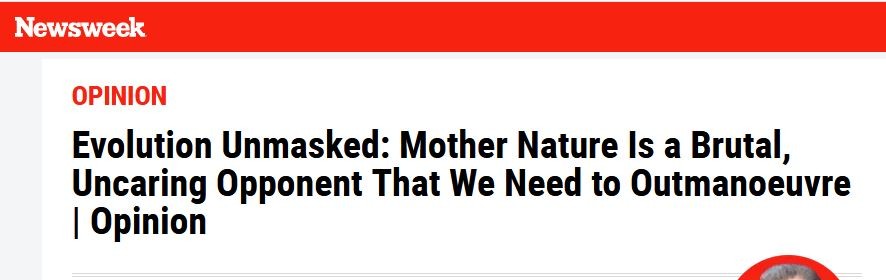

The audience that consumes such media products feels relieved. It is distracted from its own cruel and perverse impact on those ‘farm animals’ whose products lie in the refrigerator and who have spent their entire lives vegetating without freedom in windowless halls. Now it is no longer humans who are cruel, but non-human nature. The media has provided a tool for repression, and its users will thank it by continuing to use it. One of the many major problems associated with these instruments of repression is that children’s and young people’s worldview becomes distorted and destroyed. They learn that the non-human world is bad and dark – even though this is not true, as nature is in fact full of regular freedom and intense enjoyment.
As a complement to the show nature as cruel, humans present themselves as honourable rescuers of other animals
Another important mechanism of repression evident in the current mass media is moral elevation through concentrated and almost always illustrated reports about the rescue and protection of individuals of other animal species. This could be, for example, a family of ducks being guided across the road by police officers, stranded whales being kept wet by passers-by, or a young deer that has become entangled in a fence and is now being freed by a whole squad of firefighters.
The accompanying texts often contain phrases such as ‘the fire brigade had to come to get the ducks safely across the road.’ The wording ‘had to’ reinforces the soothing effect on the audience, because it makes the ‘good’ and morally superior people see it as their natural duty to help other animals. The fact that in reality the opposite is true, namely that humans are subjecting the majority of other vertebrates in factory farming to a perverse and lifelong hell of unprecedented proportions in the history of the Earth, is thus obscured. When a reader forum is offered alongside the corresponding ‘rescue articles’, it is therefore very common to find euphoric expressions of gratitude there.

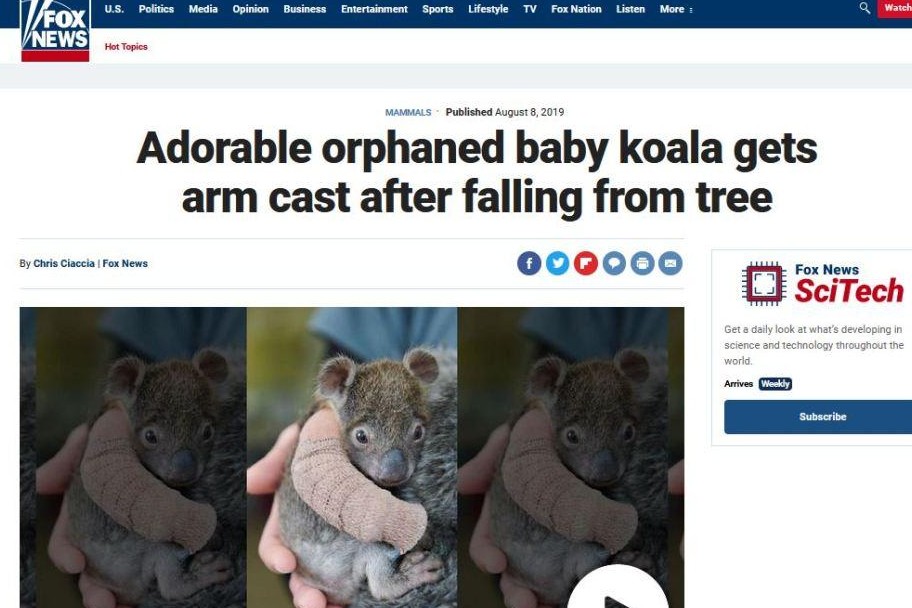
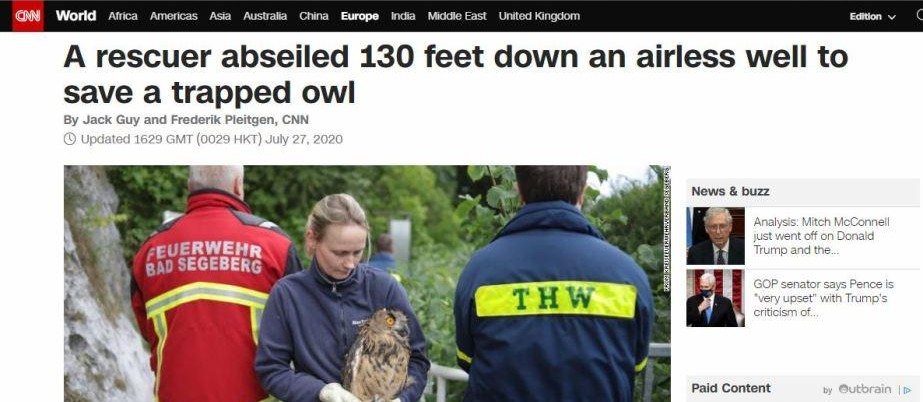
The symptom of moral elevation through care and belittling
In addition to rescue, visible care and belittling are closely related symptoms of psychotic repression. Once again, the focus is mainly on photographs or film clips, with texts serving as a supplement. Mostly, individuals who fulfil the so-called child schema are shown, because this stimulates the caring instinct particularly strongly, especially in the female part of the audience. Another characteristic is that protective human hands are almost always depicted.
Mass media examples 7, 8, and 9 (bild.de) [9][10][11]:
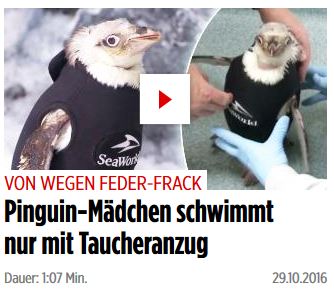


The symptom of self-aggrandisement through caring, generated by repression, can escalate into collective mass hysteria when it is carried by many media outlets. A bizarre example of this was the hysteria that broke out in 2007 around a polar bear born in Berlin Zoo named ‘Knut’, later also known as ‘Cuddly Knut’. After his mother rejected him, humans took on the role of caregiver. Initially, two regional broadcasters picked up on the touching story – and then it suddenly exploded. After a few weeks, during which almost all of Germany’s major mass media reported daily on ‘‘Cuddly Knut’’, the hysteria finally spread around the globe.
Around 500 journalists from Germany and abroad attended the official presentation of the polar bear by Federal Environment Minister Sigmar Gabriel. Television stations reported live, and many presenters had tears of emotion running down their cheeks. The audience of millions, stirred by strong emotions, felt like collective protectors of the small, helpless bear. Incidentally, because the concept with the polar bear cub was so successful and popular, it has been repeated almost every year since then as soon as a polar bear is born in a zoo. It is, so to speak, a classic example of repression. The following piece from Bild.de asks in 2017, so 10 years after Knut: „Who is sweeter – Knut or Fritz?“
Mass media example 10 (bild.de, excerpt) [12]:
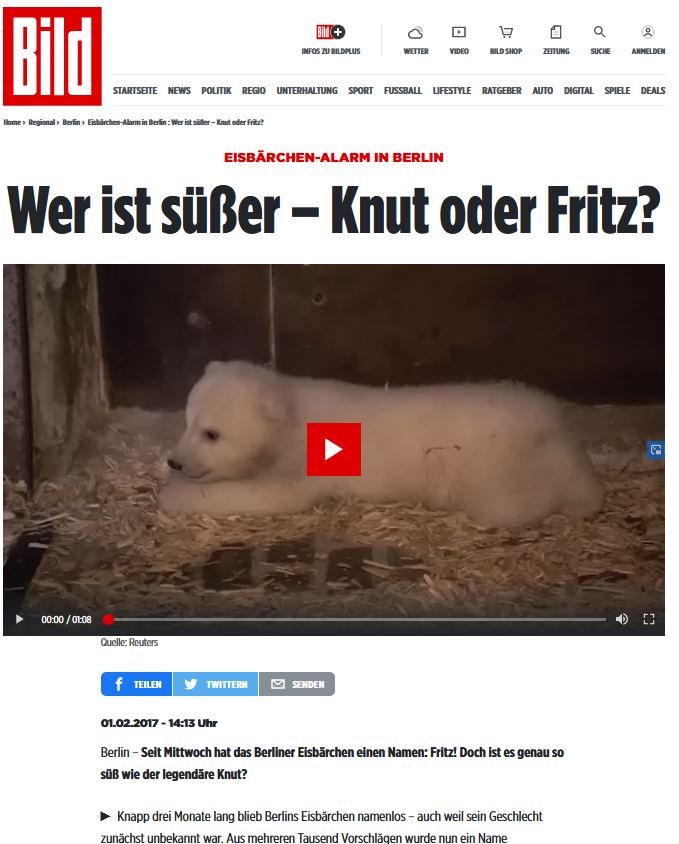
Parallel to the initial hysteria surrounding ‘‘Cuddly Knut’’ at the same time, Germany — virtually unnoticed by the mainstream media — set out to achieve historic records in important fields of technology and product exports related to industrial factory farming. As a result, this relatively small country ranked second behind the USA among the largest exporters of pork meat in 2008. Shortly afterwards, Germany became the global leader. The example of ‘Cuddly Knut’ thus clearly illustrates the highly complex and profound psychotic interactions between the symptoms and mechanisms of repression with the escalating perversion of industrialised factory farming.
The totality of the current symptoms of repression of one’s own unnaturalness corresponds to those of a severe mental illness
Even though the symptoms shown may not make it apparent when viewed individually, looking at them as a whole makes it clear that this is a pattern of severe mental illness that has already reached an advanced stage.
If the collective mechanisms described were to be transferred to a human being, this would metaphorically correspond to a person with severe mental illness who – while the weather outside is beautiful – sits in their old childhood bedroom with the blinds drawn, deeply moved and lost in their tightely self-centred thoughts, rocking back and forth and stroking their worn teddy bear on the head. Down in the basement lies the cause of his problems – there, victims chained by him languish in their faeces. In the kitchen, a fire has broken out due to the stove being left on, which he can no longer perceive due to his disconnection from reality and which will soon destroy him and the entire house.
The beautiful weather outside represents the reality of the great outdoors, the drawn blinds represent its exclusion, the teddy bear symbolises the pampered compensation objects, the victims in the basement represent the billions of animals confined in factory farming, the forgotten stove represents the inability to live caused by repression mechanisms, and the fire represents the already started destruction of the ecosystem and one’s own existence.
CONCLUSION
The history of Europe in particular clearly shows that, up to the present day, the repression of the unnaturalness of articial breeding and permanent control of other living beings has been a central factor in shaping the evolving collective worldview. The collective sacrificed a clear perception of reality and instead submitted to various constructs that made it possible to keep this own unnaturalness as far away from the surface of consciousness as possible. For this goal, human beings themselves were artificially elevated. In addition, the spiritual perspective narrowed itself, so that almost only humans remained visible, who in turn appear to be particularly ‘morally good’ or even ‘godlike’. As a result, and not least because of the additional artificial degradation and denigration of the non-human parts of nature and thus of reality, each new generation of children has been subjected to severe psychological mutilation and further damage. In the present day, this has escalated against the backdrop of the gradual sharp increase in unnaturalness in the context of industrial methods of breeding and subjugating other life forms. The content of the repression methods also shows that the subjugated ‘farm animals’ play a decisive role. Due to their relative similarity to humans, unnatural behaviour towards these animals is perceived much more strongly than would be the case with crops, which means that the mental effort required for repression and the resulting damage are many times greater here.