
Consciousness and enjoyment are based on physical principles and are fundamentally the same in all animals
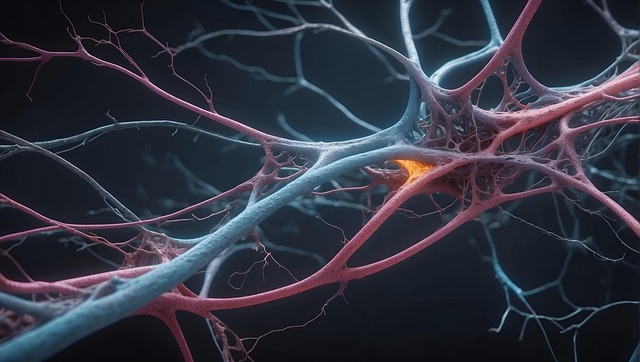
The current state of empirical research on cognition and consciousness shows that no reliable evidence has been found to support any of the earlier claims of exclusive states of consciousness in humans. Rather, the findings as a whole indicate that for over half a billion years, animals have possessed the same basic self-awareness, perception, and enjoyment as the modern species Homo sapiens. Alleged exclusivities such as “divine spirit”, “reason” or “free will” were, as such, constructs created with the help of our relatively strong cognitive ability to think abstractly in order to artificially elevate humans and demean other animals. The motives were always to repress the unnaturalness of breeding and subjugating so-called “farm animals.” Meanwhile, significantly higher sensory perception capabilities and stronger cognitive characteristics suggest that animals existing independently in ecological structures have had significantly higher intensities of perception and enjoyment for around half a billion years than we humans today, who are separated from our original space for development by the system of civilization.
PRELIMINARY REMARK: At first glance, the connections surrounding “consciousness” do not seem to be directly attributable to the specific physical mechanisms and laws discussed in other sections under the terms ‘evolution’ and “freedom.” However, there is no logical reason for such a distinction. Virtually all life forms, including bacteria and plants, exhibit diverse mechanisms for receiving information and responding to it. In animals with a central nervous system, these mechanisms have become so pronounced in the course of evolution that they can easily be assigned to the term. A look at the laws of evolution and the resulting history of life on Earth suggests that, under the given and undisturbed physical conditions, organisms equipped with central nervous systems, including sensory perceptions processed therein, and sensations modulated by neural reward systems were bound to emerge. This is supported by the fact that these organic structures have been stable and thus sustainably established in most animal forms for more than half a billion years. They also appear to have developed convergently, i.e., multiple times in parallel. It is now undisputed that insects and mollusks, for example, possess neural reward systems that function in principle no differently than those of vertebrates. However, apart from steps taken a very long time ago, no linear evolutionary history can be discerned. The same applies to sensory organs and sensory stimulus processing in a central nervous system.
The question of consciousness in other animals is of utmost importance for understanding the world
The question of whether the animals that have lived on planet Earth for over 500 million years had consciousness and experienced pleasure is of great importance for understanding the overall context of the physical world. The reflection here refers only to life on Earth. However, there are good reasons to assume that this is not only not unique in the observable universe, but that carbon-based life is a regular, very common phenomenon accompanied by far-reaching convergences.
So if it were true, as large parts of philosophy, religion, and other civilizational groups claim, that only the animal species Homo sapiens has a perception of itself, a horizon of experience, and the ability to enjoy its own existence, then this enormous span of time on Earth would have been, so to speak, a rather boring affair. All the many other animals that existed during this time would have been something like dull and mindless biorobots, and it was only when humans appeared a relatively tiny amount of time ago that the enjoyment of free development and the perceived adventure of life truly came into being for the first time.
But if it was completely different, namely that other animals also had such consciousness and felt pleasure, and that this took place – out of necessity – at much higher levels than we humans, woven into the system of civilization, could still achieve today, then for over half a billion years, planet Earth was a gigantic space of intense and conscious enjoyment of the states of freedom created and secured by the laws of physics. And since, as shown in the section on universality, the Earth’s ecosystem is most likely not unique, but rather the observable universe is likely to be permeated by a large number of similar ecosystems, the phenomenon of consciousness must also occur regularly and with great frequency.
The Earth had been inhabited by consciously perceiving living beings for at least 450 million years.
In fact, a reflection on the current state of knowledge in relevant sciences such as cognitive or neuroscience reveals that there is no empirical evidence to suggest a fundamental difference between the conscious perception and sensation of humans and at least other vertebrates. Corresponding claims about alleged exclusivities inherent only to humans, such as ‘self-awareness,’ “reason” or ‘free will,’ have all been exposed as artificial inventions propagated through the misuse of language.
Meanwhile, diverse empirical evidence has made it possible to reconstruct that, for at least 450 million years, all vertebrates have possessed the same basic organic prerequisites for perceiving and enjoying their existence as humans do today. Furthermore, it can be concluded for several reasons that their freely developed existence in the natural world was (and still is) accompanied by much greater intensity in terms of perception, consciousness and enjoyment than is the case for us humans, who are supported by the system of civilisation.
What exactly is ‘consciousness’?
At first glance, it does not seem easy to define and describe consciousness in any meaningful way. But if one does not get bogged down in the search for complicated solutions from the outset, but instead seeks explanations that are as clear as possible and, above all, truly solid, taking into account the state of empirical neuroscience, then a surprisingly stable picture emerges quite quickly. And it then becomes apparent that other animals, such as blackbirds or squirrels, must have an ‘I’, a conscious horizon of perception and the same basic sensations as we humans.
The easiest way to begin understanding consciousness is to mechanically reflect on our own horizon of experience, i.e. what we perceive as soon as we wake up in the morning. It can then be stated without doubt that this perception is largely determined by stimuli and information provided by our sensory organs. This includes, for example, the taste of food or drink, the sight of visual information, the smell of scent molecules and the hearing of acoustic stimuli, as well as the sensory feeling of warm or cold air on the skin. Another undoubtedly essential component of perception from the moment we wake up in the morning are the sensations and emotions that are produced in the brain itself. These include the ‘feelings of happiness’ triggered in the so-called neural reward system by the body’s own opiates and other hormones, but also perceptions such as pain or anger.
The focal point of perception is the actual ‘I’
There are therefore two very specific main qualities that essentially make up consciousness: on the one hand, the information provided to us by the sensory organs, for example through sight, hearing, smell, taste or touch, and on the other hand, the emotions and sensations triggered by organic structures and hormones in the brain. And these two qualities must come together in something like a ‘point of concentration’ and be ‘perceived’ there. If this were not the case, there would be no sensory organs, no nerve pathways and no sensory impressions, no neural reward systems, no emotions and no sensations. And since all animals equipped with a central nervous system have sensory organs and neural reward systems, it cannot be otherwise than that they have such a point of concentration. This is already the clearest and most stable proof of the fundamental existence of their perceptive consciousness.
All human exclusivities were inventions as such – if humans have a ‘soul’, then it must also be present in other animals.
Before taking a closer look at the relevant empirical findings on organic structures, another indirect line of evidence can be inserted: namely, a cross-check of all previous claims relating to the alleged fundamental peculiarities of human consciousness compared to that of all other animals. In this way, it becomes apparent that not a single one of these claims stands up to such scrutiny, regardless of whether they were of religious, esoteric or philosophical origin. These were always often very clever and imaginative illusions of the collective subconscious, frequently formed on the basis of written constructs compiled over many years for the purpose of negating the consciousness of other animals.
One of the best known and oldest of these tricks was the exclusive ‘soul’ of humans. The species Homo sapiens is said to have a special soul, while other animals do not. The problem with this trick, which has now fallen somewhat out of fashion, was that no one could ever really pinpoint what exactly this exclusive human soul was supposed to be. And in the course of empirical research into consciousness, cognition and the brain, nothing was ever found to confirm such exclusivity of humans. In terms of exclusivity, it was simply a product of the imagination. If one wants to define the ‘I’ of the perceiving centre of concentration as the soul, then other animals have always had a soul too.
The trick with exclusive reason as a prerequisite for freedom – an artificial product of philosophical imagination
Another well-known trick for faking an exclusive state of consciousness was invented by philosophers in particular, and it went like this: humans are the only beings on earth that possess true ‘reason’. This reason was basically already a definition in itself of a supposed central part of consciousness. And as a decisive addition to this invention, it was also declared to be an absolute prerequisite for the state of freedom. Thus, the position of humans was well established: only they had reason and thus true consciousness, and therefore only they could be in a state of freedom.
There are various reasons why this contrived construct – after having been firmly established for centuries – has now fallen somewhat out of fashion. On the one hand, as with the ‘exclusive soul’, no truly conclusive or even empirically provable definition of the supposed exclusive reason of humans has ever been found.
The only logical definition of genuine reason would be the cognitive orientation of the decisions and actions of rational beings towards the best possible and thus sustainable survival of themselves and the transmission of genetic information to subsequent generations. But when this only possible logical definition is applied, modern humans appear to be beings with a particularly low level of reason in relation to practically all other animals. In particular, the now widely proven process of destroying our own foundations of life makes the claim of exclusive human reason seem like a bad joke.
The arguments put forward by earlier philosophers such as Descartes and Kant, often over hundreds of pages, for the supposed exclusive rationality of humans were largely intellectual hot air. Their enormous popularity was due to the fact that the collective of humanity demanded precisely this: an artificial elevation of humans while simultaneously demeaning other living beings and negating their consciousness. And the actual main goal was to legitimise the enslavement of other animals in particular. So it was certainly no coincidence that the contrived ‘exclusive reason’ was also supposed to be the basis of ‘exclusive freedom’.
The relatively well-developed neocortex is neither the home of the ‘I’ nor the generator of consciousness.
One of the well-known tricks was the simple assertion of an exclusive self-consciousness in humans, without further justification. People said and wrote things like, ‘I understand that I have a self, and only we humans can do that, but animals cannot.’ This vague concept is still firmly entrenched in the world view of humanity in general. The fact that this is not the case among experts is because research into the brain and cognition has simply failed to find anything stable that could justify the difference between self-perception and the corresponding consciousness in humans and that of other animals.
While the layman – as can be easily observed on the internet – can simply blurt out: ‘But that’s how it is, I know that only I, as a human being, can think properly and perceive my self, and that animals cannot do that,’ such assumptions require at least something tangible in empirical research, i.e. something that can be proven beyond pure idea and imagination. In serious research, there was actually only one argument that could be justified to some extent, but this has now also been disproved. It was assumed that the neocortex, i.e. the cerebral cortex, which is relatively more pronounced in humans than in most other vertebrates, was the prerequisite and home of self-awareness.
From the 1980s onwards, more and more voices from the relevant professional circles began to point out that the neocortex is not a central organic functional unit of vertebrate brains, but rather a subordinate structure compared to most organic brain structures. In the 1990s, when computers became popular, comparisons were finally made with a hard drive that is relatively powerful in humans but neutral in terms of consciousness. The fact that humans are actually capable of much higher levels of abstraction and thus of calculation and complex information exchange was now recognised as a consequence of this ‘hard drive’. But at the same time, the logical conclusion emerged that the actual ‘I’ and the perception of it, as well as consciousness in general, must originate in the much older and more central regions of the brain.
Serious cognitive research has now recognised that other animals have fundamentally the same consciousness, but is now trying to make it seem rather insignificant
What happened as a result of these new insights within the serious parts of cognitive research was practically an escape in another direction: from around the turn of the last millennium, it was generally accepted that the neocortex cannot be the place where consciousness arises and that, due to their largely similar brain structures, other vertebrates must also have consciousness. But now it was said that the relatively strong development of the cerebral cortex in humans should not only be viewed as the cold hard drive of a computer, but also as an amplifier of the richness of perception and consciousness. This would mean that blackbirds are also equipped with a point of perception and concentration and thus a fundamentally similar consciousness, but that their horizon of experience is significantly ‘poorer’ than that of humans.
To illustrate this current (2020) mainstream view of the world held by cognitive scientists, here is a quote from António Damásio, a highly renowned professor of neurology and psychology at the University of Southern California. He is at the cutting edge of his field and summarised the relevant point as follows in 2017:
„It is also interesting that we share the brain stem we have with a variety of other species. In vertebrates, the design of the brain stem is very similar to ours, which is one of the reasons I assume that other species have consciousness like us. Except that it is not as rich because they do not have a cerebral cortex like we do. That is where the difference lies. I strongly disagree with the idea that consciousness should be considered the great product of the cerebral cortex. (…)“ [1]. External source: TED.com
An animal that has developed freely in nature must have a much more intense and richer horizon of experience than a ‘civilised human being’.
Now that the idea of the exclusive consciousness of humans compared to that of other animals has been dispelled due to a lack of evidence, a whole new excuse has emerged: attempts are now being made to find at least a gradual reduction in the consciousness of other animals. Their range of experience is to be reduced to a rather pale and dull affair, while that of humans is said to be colourful, large and rich in comparison. However, it is easy to show that this assumption also has no real basis and that a deeper analysis even reveals the opposite to be true.
Fundamentally, a high level of richness within the focal point of consciousness can only arise if the perception of incoming and processed sensory information and sensations is as diverse and intense as possible. And on the basis of numerous pieces of evidence, it can be assumed that these parameters must be even higher in an animal that has developed freely in nature than we humans could ever experience today.
The first reason for this assumption is that humans living in civilisation have a level of sensory perception that is far below that of most other vertebrates living freely in nature. The visual, acoustic, olfactory, gustatory and sensory impressions perceived at the focal point of consciousness, i.e. the ego, have greatly diminished in intensity in the course of civilisational development because they were much less necessary. Thus, a far-reaching regression has taken place due to disuse. Practically all vertebrates living freely in nature have been described as having sensory perception capabilities that gradually exceed ours many times over. This also includes humans who still existed as hunters and gatherers.
It can therefore be assumed, based on the relatively more sensitive sensory organs and sensory perceptions, that a deer or a blackbird in the forest, for example, hears, sees and smells many times more than a ‘civilised human’ staying there at the same time. And there is no way to justify how and why the more pronounced but, in terms of this perception, neutral abstract thinking ability of humans should cause a subsequent strengthening and intensification of these essential building blocks of the horizon of experience and of perception as a whole. Obviously, this is again a mere idea that has sprung from the imagination and has no logic whatsoever. It may have become established in the minds of the general public, but it cannot be empirically justified in any way.
The neural reward system is largely the same in all vertebrates
So, assuming that the main quality of sensory perception in humans in the system of civilisation occurs at relatively low levels of intensity compared to other animals that develop freely in nature, the next question would be how intense are those sensations that we call ‘feelings of happiness’ and that originate in the organic structures of the brain.
First of all, it can once again be stated with certainty that all previously assumed fundamental exclusivities of humans with regard to emotions and sensations have collapsed under the pressure of empirical research findings. With regard to vertebrates, there is now nothing that could provide an empirical justification for a difference between the emotional worlds of robins, pine martens, humans or salmon, for example. In 2011, researchers at the University of Austin, Texas, published the results of a comprehensive systematic analysis that reflected on several hundred relevant studies in the fields of neuroanatomy, neurochemistry and genetics, among others [2].
This evaluation showed that in all vertebrates, the parts of the brain responsible for producing most emotions and sensations have remained anatomically almost unchanged for 450 million years and are still largely the same in all fish, amphibians, reptiles, birds and mammals today. This applies, among other things, to the aforementioned neural reward system, i.e. those areas of our brain that largely control behaviour with endorphins and other endogenous opiates and that produce pleasant feelings of happiness on an organic level. It also applies to the so-called ‘social network’, which extends beyond the actual reward system to the diencephalon and the anterior brain stem.
The similarity extends to genetic structures and various hormones and neurotransmitters. Not only are the same dopamines used, but also the range of steroid and peptide hormones, such as the ‘social hormone’ oxytocin. This study, which is virtually universally recognised in the scientific community, provides factual evidence that everything we humans feel is felt in exactly the same way by all other vertebrates. And it is another building block in the solid recognition of fundamentally equal consciousness.
Many colleagues in the field have assessed the findings developed in Austin as a departure for their entire profession into a completely new level of knowledge. The Viennese behavioural scientist and head of the Konrad Lorenz Research Centre, Professor Kurt Kotrschal, called it an ‘event of the century’ and published a summary that is easy to understand even for laypeople, which can be accessed on the Internet under the heading ‘From fish to humans: a single family’
. [3]
Free development in the natural environment is the basis for maximum intensity of sensations
As for the question of the intensity of the fundamentally identical sensations of all vertebrates, this cannot be measured as directly as sensory performance can. However, in view of the inevitably much more intense expression of all characteristics, traits and needs that have evolved over hundreds of millions of years and are therefore innate to the individual in the original environment of nature, it can be assumed that the organic structures of the neural reward system, which actually developed to control behaviour, are also exploited to a much greater extent. characteristics and needs in the original space of development in nature, it can be assumed that the organic structures of the neural reward system, which actually developed to control behaviour, are (must be) exploited much more intensely than is the case with us humans, who are supported by the system of civilisation.
In a logical sense, the complete free development of all characteristics that have evolved and are innate to the individual in the original space of development in nature is even the decisive basis and prerequisite for the maximum intensity of all sensations. For the evolutionary purposes of these sensations have undoubtedly been to exist in the best possible way in this space of development for several hundred million years. The many substitute actions of civilised humans to stimulate the reward system can only approach this maximum, but cannot possibly achieve it. It does not matter how one tries to bring about substitute stimulation, for example through drugs, food, media, sport or any consumption of civilised products. It can therefore be concluded that, in addition to the primary quality of sensory perception, the intensity of sensations in free-living vertebrates in nature is at a much higher level than we could ever experience, and that this has been the case for almost half a billion years.
Invertebrates also have neural reward systems, including ‘happiness hormones’.
Recently, numerous empirical studies have been published which show that not only vertebrates, but all animal species equipped with a central nervous system have largely the same organic prerequisites with regard to emotions and sensations. For several decades now, there has been evidence that arthropods, such as insects and spiders, have a neural reward system that functions in much the same way as that of vertebrates [4].
And now, the same structures and functions have even been found in relatively much ‘simpler’ animals – down to tiny nematodes [5]. These are, of course, much less complex than those of blackbirds or humans. But this means that not only the consciousness that perceives sensory impressions, but also its enjoyment of a self-determined and freely developed existence, is an empirically proven fact which – in a fundamental sense – applies to practically the entire animal kingdom on planet Earth.
Human language as a philosophical ‘lifeline’ and the illusion of its function for thinking
For the complete dissolution of the illusion of exclusive human consciousness, there is now one more point that is used as a last lifeline, especially in the philosophical guild: language. The attempt is made to use the very tool with which all the artificial and now completely refuted constructs of human exclusivity were built to prove such exclusivity. Numerous empirical findings easily demonstrate that this is once again merely a trick to conjure up a special state of consciousness.
Human language is a method of exchanging information between individuals of the species Homo sapiens. Other animal species also use diverse and often very complex methods of this kind, most of which are just as incomprehensible to humans as our language is to other animals. The tools used for information exchange by all other species extend across all the senses and are often very complex and delicate. Insects, for example, sometimes use individual molecules of scent to communicate. And many birds, bats, fish and other vertebrates use sounds that we cannot hear at all.
A widespread illusion surrounding human language is to imagine that ‘thinking’ only comes about through it. That this is really based on pure imagination can be seen quite practically in oneself when one wants to say something – i.e. convey something abstract – and cannot think of the right word. You know exactly what you want to express, what it’s about, and ‘the word is on the tip of your tongue,’ but you just can’t find it.
Language is therefore actually only a secondary abstraction of thoughts, which would otherwise exist in exactly the same way even if no language were used. And actual thinking can be nothing other than the processing of incoming information in the conscious point of concentration, which is why it must also exist in other animals.
Due to humans‘ relatively strong capacity for abstraction, they can extend their thinking to fields that other animal species may not even touch upon mentally. In particular, the relatively high degree of abstract thinking and the exchange of the results of this ability, for example through language, was undoubtedly the basis for the enormous technical achievements of today’s civilisation. However, when it comes to understanding reality in a broader context, it can be seen from a wide variety of religious and philosophical constructs, for example, that these fields are often or even largely figments of the imagination that have nothing to do with reality.
Language is therefore by no means a prerequisite for an expanded or more strongly felt ‘I’, nor for any other feelings, nor for thinking. The physicist Albert Einstein, who succeeded in applying his thought processes very successfully to grasping reality and in doing so demonstrated an enormous capacity for abstraction, relegated language to a completely insignificant position in this regard:
‘Neither written nor spoken, words and language seem to play any role in my thought process.’ [6] Albert Einstein, 1935
One obstacle to understanding lies in the shrinking horizon of experience of modern man
Even for a civilised person who understands and accepts everything written above, two problems remain that make it very difficult for them to fully grasp the enormous significance of this, at least to a certain extent. The first is that they cannot really empathise with the much higher intensity of perception of an animal that is free to roam in the natural world. We no longer experience this intensity and therefore, logically, cannot really ‘empathise’ with it.
This problem can be counteracted somewhat by occasionally trying to put oneself mentally in the position of such an animal unfolding freely in nature. Based on the understanding that its consciousness is fundamentally the same, this exercise can offer a good insight into the undoubtedly very adventurous horizon of experience of, for example, a bird that exists completely self-determined, flies through the air with nothing but its own body, spending its nights in dark, swaying trees and filling its days with activities that perfectly match its innate characteristics.
Today’s civilised man mistakenly imagines free development in nature as an unpleasant struggle for survival
Now the second of the last problems arises: people who are supported by civilisation tend to imagine this free existence, even if they no longer dispute the intensity of perception that goes with it, as a constant struggle for survival, i.e. something that must feel rather unpleasant and frightening. This is also an illusion. This illusion was constructed as part of the repression of the perversion of one’s own actions towards enslaved life forms. Typical characteristics are concepts such as ‘cruel nature’ or ‘eat or be eaten’. These were made into maxims of nature in order to conceal one’s own actual cruelty.
This problem can also be counteracted by long-term practice in the form of observation and reflection on real animals in nature. With appropriate concentration, over time one will increasingly recognise that, for example, the blackbird in the forest is equipped with everything necessary for a very enjoyable perception of its own existence. So when it sits in the dark, swaying tree at night, it does not freeze because it can fluff up its plumage so that it feels comfortable even at lower temperatures. And if it recognises a danger, such as a predator, it will, if it is healthy, be far superior to it in terms of its quick reaction.
For the blackbird, this natural danger is not frightening; it is as commonplace as the cars that the experienced city dweller is constantly wary of, without being afraid of them. And when the blackbird hunts and gathers food in the clearing during the day, it is like a human being being able to pursue their passion as much as they want. For them, it is not like it is for people today, who have to work within the system of civilisation, bending their original cognitive nature in order to earn money for food. Instead, they do exactly what suits all their characteristics, traits and needs that have developed over millions of years of evolution and are innate to them as individuals.
Such people, who still existed as pure hunters and gatherers in the natural world, apparently had access to the intense experiences that were regularly available there.
The statements in the last few paragraphs are supported by the testimonies of people who encountered pure hunters and gatherers in 19th-century Australia. For it goes without saying that the intensity of perception among these people, who were still integrated into the natural system, was at a similar level to that of other free animals living there. In 1848, the explorer Major Mitchell, one of the very few early European settlers on the Australian continent who respectfully devoted himself to the indigenous people who hunted and gathered there, wrote about their existence, which he had extensively documented:
‘Such an intensity of existence must, in short, be far above all the pleasures of civilised man, above all that the arts could ever bring him’ [7].
Mitchell described the reality of cognition so well in a single sentence that it could hardly be bettered. And a good addition can be found in a sentence by Tom Petrie, who even spent several years of his youth in Australia living among pure hunters and gatherers, learning their languages and getting to know their way of life more intensively than probably any other European. As an old man in 1904, he recalled:
‘For them, it was a real pleasure to obtain food in nature. They were so light-hearted and cheerful, there was nothing that weighed on them’ [8].
CONCLUSION:
Using the latest relevant empirical science in conjunction with logic, it can be firmly established that for around 500 million years, planet Earth has been inhabited by animals whose existence was accompanied by the same basic consciousness and the same basic sensations as those experienced by us humans. Not a single one of the many attempts to deny the consciousness of other animals in this regard and to degrade them to beings that are rather unconscious and insensitive can withstand genuine scrutiny. On the contrary, there are good reasons to believe that the perceptive and sentient consciousness of at least those vertebrates that develop freely in the natural system is and was much more intense than we humans, who are dependent on the system of civilisation, could ever experience. Thus, it can be concluded that, over the past 500 million years, planet Earth has not only been a space of regular free development, but also one of very intense, consciously perceived adventure and enjoyment of all that it has to offer.
[1] António Damásio, 2011. Vortrag auf www.ted.com. Transkipt, abgerufen am 10.05.2017 um 15:00 Uhr auf: https://www.ted.com/talks/antonio_damasio_the_quest_to_understand_consciousn
ess/transcript?language=de
[2] Comp Neurol. 2011 Dec 15;519 (18):3599-639, The vertebrate mesolimbic
reward system and social behavior network: a comparative synthesis. O’Connell LA1, Hofmann HA, Institute for Cellular and Molecular Biology, University of Texas at Austin, USA. PMID: 21800319 DOI: 10.1002/cne.22735
[3] Die Presse 18.06.2012 Kurt Kotrschal: Vom Fisch bis zum Menschen: Eine
einzige Mischpoche / Abgerufen am 24.03.2017 um 15:00 Uhr:
http://diepresse.com/home/meinung/wisskommentar/766884/Vom-
Fisch-bis-zum-Menschen_Eine-einzige-Mischpoche
[4] 2010 Barron, Sovik and Cornish: The Roles of Dopamine and Related Compounds in Reward-Seeking Behavior Across Animal Phyla; Front Behavior Neurosci. 2010; 4: 163.
[5] Chase, D. L., Koelle, M. R. WormBook. 2007 Feb 20: 1-15. Biogenic amine
neurotransmitters in C. elegans.
[6] Keith Devlin, Das Mathe-Gen oder wie sich das mathematische Denken
entwickelt Deutscher Taschenbuch Verlag, 2003, S. 153.
[7] Tim Low, Wild Food Plants of Australia, Angus & Robertson
[8] Tim Low, Wild Food Plants of Australia, Angus & Robertson