
According to the author Steffen Pichler, industrial factory farming in recent decades has caused an older collective psychosis in humanity to escalate, one that began with the dawn of agriculture. Starting with the leading industrialised nations, this is a complex root cause of consumerism, intellectual dumbing down and the accelerated destruction of the natural environment. Ultimately, this would lead to a complete inability to survive, just as in a person with severe psychosis if the illness is not treated and therefore escalates.
The interview was conducted by Claudia Waigel for ZEIS publishing
Mr Pichler, what is the basis for your assertion that, on a psychological level, industrial factory farming is a major cause of all the escalations caused by humanity today, emanating from the industrialised nations since some decades?
Pichler: First of all, other animals have always been by far the most important mental link between the human mind and the non-human aspects of reality. This can be seen, for example, in early rock paintings. On all inhabited continents, other animal species have been by far the dominant motif since the beginnings of painting. For more than 40,000 years, they have been by far the main object of artistic expression on all continents. These were not only huntable species and hunting scenes,
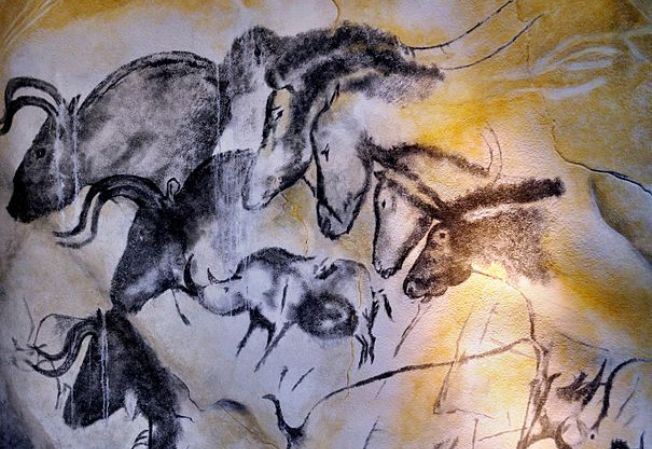
but also dangerous predators such as bears and lions, or more neutral species such as eagles and snakes. In addition, human-animal hybrids were often depicted. Even in the oldest known paintings, created 43,900 years ago in the Leang Bulu cave on Sulawesi, there are figures in which humans are combined with body parts of birds and reptiles. This mental connection can also be seen in various ways in the present day. For example, in infants before and shortly after language development, there is a very strong visual focus as soon as they discover a squirrel, for example, or they clearly address stuffed animals and later illustrated animal stories. This is also the same on all continents.
How can I imagine the underlying mechanism of this mental connection to reality?
Pichler: It’s actually quite simple. First, imagine that you are reformatting your brain and then rediscovering reality from scratch. Now all information is completely gone, like on a blank sheet of paper, and your mind constructs a new world view based on the information from reality captured by your sensory organs. Since there is nothing among everything you now perceive, except for other humans, that bears even the slightest resemblance to yourself as far-reaching as other animals, the main mental connection to non-human reality can only fall there. And now you can transfer this thought experiment beyond the individual to the very large framework of the development of human cognition. In doing so, the most important connection must also have fallen on other animals. It is the same pattern, only that it has unfolded over many generations and, with all animal ancestors, over a developmental history spanning hundreds of millions of years. A newborn human being does not come into the world with a blank sheet of paper, but rather with large parts of their cognition, behaviour and perception already pre-formed. The particularly important and central connection is not constantly being rebuilt, but lies immovably at the centre of our minds. In this sense, the focused child has not discovered something new, but rather its cognition recognises in the squirrel, as it were, the opportunity for a mental connection to reality. This could also be interpreted as a very important calibration of the child’s developing mind.
Many people would now counter that new mental connections to reality have emerged for today’s civilisation, such as technologies or knowledge about the larger contexts of the universe.
Pichler: That is pure imagination. Knowledge about the universe, for example, plays only a very minor role in the consciousness of most people today, if only because it is mainly theoretical. And technologies are really just tools for transport, information transfer and all kinds of conveniences and comforts. In a deeper sense, no new points of connection to reality have emerged at all. And to emphasise once again: the formative perception of other animals as a real and central point of connection to reality has been present in our own evolutionary ancestors since brains have existed, so for several hundred million years. These are the most fundamental imprints in the deepest regions of the psyche formed by cognition. Such things could not possibly be replaced by any subsequent information or self-created technologies. All of this is always much shallower than these deepest imprints and thus only superficial, like a very thin film.
So you mean that what you claim to be an escalation of psychosis in humanity has arisen because this important link to reality has become located in the halls of factory farming?
Pichler: I would define it a little more deeply. Most larger land vertebrates except humans themselves exist today in forms of intensive animal husbandry, and every single person knows where the many goods in supermarkets come from. Empirical studies from Germany show that in surveys, almost 100 per cent of participants say that they fundamentally have a problem with factory farming and would rather ignore it. Try to find any other empirically proven cognitive problem with a higher quantitative rate. You won’t find anything, whether it’s environmental issues, climate change or anything else. Humanity recognises that this is an extremely unnatural phenomenon that should not actually exist in the natural order of things. However, individuals are hardly aware of this because there are very strong repression mechanisms at the collective level.
Do you think this is about what we call conscience, and is the motive for repression aimed at suppressing something like a ‘guilty conscience’?
If you mean a guilty conscience towards animals in factory farming, then I would say no. That may play a secondary role, but it is certainly not the deepest and main motive for repression. However, you are correct in using the term guilty conscience. Like the protective instinct, these are ancient and fundamental emotions that have very important functions in all social animal species. Their evolutionary purpose has always been to stabilise and secure one’s own social structure, because this is the basis of individual existence and, more importantly, the basis for passing on genetic information. These and some other ancient emotions were and are therefore primarily oriented towards benefiting one’s own social structure. Industrialised factory farming has made it clearer than ever before that this social structure is practically diametrically opposed to the fundamental order of nature. The notion, repressed in the subconscious for millennia, that agricultural methods involving artificial selection and the lifelong subjugation of other animals and plants are leading to the self-destruction of our own social structure, has now come closer than ever before to the surface of our consciousness. This applies at both the individual and collective levels.
So the mental problem did not fundamentally arise with the advent of industrial factory farming? Animal husbandry has been around for several millennia.
Pichler: No, the mental problem fundamentally arose with the beginning of animal husbandry itself and even agriculture as a whole. Artificial selective breeding of plants also runs counter to the fundamental order of nature, and this must also have been recognised very early on. It’s just that the triggers in the form of bred and kept animals were much stronger than all other aspects of the process because, due to their similarities to us, they have always been the main link to natural reality. The relationship between early hunters and gatherers and other living creatures was literally pure because, as had been the case in nature for hundreds of millions of years, these creatures, just like themselves, had their own free, self-determined lives, and contact during hunting usually accounted for only a tiny fraction of the lifespan on both sides. The most important link to the real world structure and its regularities was thus undisturbed. With the so-called Neolithic Revolution, the beginning of artificial breeding and lifelong keeping of other living beings, a very radical break occurred a few millennia ago. Suddenly, humans found themselves in a relationship with other life forms that no longer existed freely and reproduced autonomously, but were in fact their lifelong slaves, even across generations. This disrupted the ancient natural order to which the cognition of all our hunting and gathering ancestors had adapted over at least 500 million years. Vertebrates with brains have existed for that long.
But here, many people today would say that if anything, killing must be the actual sin, and that therefore even the early hunters of other animals committed the same sin with their own hands.
Pichler: This attitude is widespread in civilisation, but it is nothing more than an attempt to distract attention from the motif of repression mentioned above. People try to distract attention from the subconsciously perceived unnaturalness of the lifelong subjugation of other living beings by focusing on killing, which also occurs in nature. In fact, every living creature that is born dies at some point; this is a central regularity of nature and part of the basis for the diversity of the ecosystem. But it is also a central regularity that between birth and death, there is on average a much greater span of free unfolding of the individual in all species. The brief and selective act of killing a free animal for the genuine purpose of obtaining food, or even the potential danger of being killed in the same way as a result of one’s own freedom, are not disruptive factors in this regular structure. It is usually a particularly quick and surprising natural cause of death at the end of a free existence, and this is exactly how our ancestors understood it. In nature, freedom is the linchpin, while birth and death are only indispensable side effects of life. And, by the way, killing an animal that has been enslaved all its life and therefore has no chance of survival is quite different from killing an animal that has been completely free until that moment and has had the chance to escape. These are two very different things. There are also accounts of statements made by early hunters and gatherers who, after their first contact with civilisation, perceived not only the lifelong captivity of other animals as something extremely dishonourable and unmanly, but also the act of killing them out of this captivity.
So was there a collective psychosis as early as the Neolithic Revolution, long before the advent of industrial factory farming?
Pichler: In any case, the so-called Neolithic Revolution caused a very strong cognitive dissonance due to the radical departure from the regularities of nature that had always been firmly imprinted in our cognition. And in order to reduce the unpleasant tensions this caused, artificial worldviews were created over thousands of years with the help of the imagination and welcomed with open arms, in which unnaturalness no longer appeared as such. These were complex collective processes. A very well-known example, over 2000 years old, can be found in the very first pages of the Old Testament and thus also of the Bible, where it is explicitly stated twice that an almighty God has commanded man to rule over all animals and subdue the whole earth. This clear framework for the world view was the real recipe for success of this religious foundation. Later, philosophers invented the supposed exclusive human reason, which in turn was the prerequisite for freedom, which was thus also only available to humans. So it was always about exactly the same main goal, namely to legitimise the artificial breeding and consequent lifelong enslavement of other living beings, which began with the Neolithic Revolution, by means of a reinterpretation of reality in order to reduce the unpleasant tensions of cognitive dissonance. Those who succeeded in doing so were rewarded with public applause. However, the acceptance and imposition of such artificial worldviews to reduce tension was, in itself, obviously a psychotic mechanism from the outset, as it already disconnects the mind from reality to a considerable extent.
And the artificial concepts of religions and philosophies no longer work in the face of industrial factory farming?
Pichler: For most people in Europe, for example, inventions such as God’s command and the supposed exclusivity of reason are still very influential, even if they are not consciously aware of it. But these artificial stories are no longer sufficient in the face of the extreme escalation of breeding and unnatural enslavement, and even with all the mental knotting and imagination in the world, it would no longer be possible to concoct a halfway functional substitute. Until the middle of the 20th century, most ‘farm animals’ roamed freely in the open air, at least during the warm half of the year, on farms and pastures. Chickens pecked for insects, cattle grazed on grass, reproduction took place through reasonably normal mating, and so on. Deviations from natural regularities were thus still at a relatively low level, and the soothing concepts of religion and philosophy were sufficient to reduce the tensions that mainly occurred subconsciously. Today, the vast majority of the planet’s terrestrial vertebrate biomass exists in factory farming. Most of them never see daylight or green plants in their lives, are crammed together by the thousands and forcibly artificially inseminated, effectively raped. Added to this is extreme breeding. So-called high-performance cows can hardly move because of their large udders, and in Germany alone, tens of millions of broiler chickens develop such large chest muscles in three weeks that they tip over when they stand up. Information about this unprecedented and boundlessly escalating perversion has been seeping through to all receptive people in the influential industrialised countries for several decades.
It is then always very quickly and forcefully suppressed from the surface of consciousness. As individuals, humans are therefore mostly unaware of the enormous tensions. But they have an even stronger effect on the subconscious, where they cause severe poisoning of the mind and its ancient connection to reality. It is important to consider the connection explained at the beginning, otherwise the enormous significance of this poisoning cannot be understood.
But what is happening in people’s minds? If the old connection no longer functions , then people must have completely disconnected themselves from reality.
Pichler: That’s one way of defining it. The collective mind is now in a kind of idle state. It has practically lost touch with reality and is spinning around without meaning or purpose. This process can be compared to what happens to individuals in the final stages of a very severe psychosis. At the beginning of the illness, this manifested itself in relatively mild forms of madness; applied to the collective process, this would correspond to the religions and philosophies mentioned above. Now, at the end, however, the person affected loses all rational connection to reality. They no longer have any framework for orientation, make only wrong decisions, fail to recognise dangers, neglect their food intake and personal hygiene, numb themselves with all kinds of substances and, if they have no care, perish from a combination of all this and much more. In short, they are now completely incapable of surviving. This is true even if their original mental potential would have been more than sufficient to cope very well with reality.
So that would mean that practically all of the many, now very confusing escalations surrounding humanity today are symptoms of this inability to live, caused by the loss of contact with reality?
Pichler: Yes, applied to the collective of today’s humanity, physical self-destruction is expressed, among other things, in the rapid destruction of our own livelihoods through boundless consumerism and a variety of misguided decisions regarding intensive agriculture and technology. The consequences include the increasing contamination of fertile soils with fertilisers and toxic pesticides, as well as damage to surface water. By the way, the largest share of current ecological destruction is attributed to animal husbandry. When rainforests are cleared in South America, for example, to create agricultural land, it is mainly for the cultivation of soya and other animal feed for industrialised livestock farming on other continents, or for new pasture land for cattle breeding. Global consumption of animal-based foods is currently accelerating at an unprecedented rate. In many so-called emerging countries, people want to eat what the industrialised countries have virtually set as an example for them. Overall, therefore, the common main cause of both psychological and physical damage is escalating. If you consider civilisation as a single entity, then it is currently making what are virtually the most stupid and self-destructive decisions possible.
What further damage results from the repression and demolition of reality on a collective level?
Pichler: The further damage on a psychological level lies in the severe loss of the extremely important perception of the beauty and fascination of nature and thus of reality. For the purpose of repression, attempts are made to make nature and thus the entire non-human reality appear as cruel and unattractive as possible in order to be able to hide one’s own extreme and completely unnatural cruelty. Attempts are also made to make humans appear particularly good, setting them apart from the supposedly cruel nature, by trivialising and pampering compensatory objects such as polar bear cubs in the zoo. These are clear symptoms of severe psychosis, which can be observed in many ways in the mass media. The loss of perception of nature and thus of reality as something beautiful and fascinating leaves a brutal vacuum. This leads to enormous mental flattening and to uncontrollable urges for all kinds of meaningless and boundless consumption as well as artificial substitute realities. And overall, there is a disorientation and fragmentation of collective consciousness and intelligence, which is also clearly visible in the mass media. This is a downward spiral of the entire human race, originating in the industrialised nations, into complete inability to survive and very rapid self-destruction. The symptoms mentioned are likely to become significantly worse within the next few years and increasingly appear like collective dumbing down. It is not unlikely that humanity will ultimately, in its death throes, drag down and destroy at least large parts of higher life on Earth with it into the abyss.
To return briefly to the individual level, for example to the toddler mentioned at the beginning who is focused on the squirrel: even if collective repression is fundamentally effective, would this child suffer severe mental damage in the further course of its existence as an individual?
Pichler: Of course that’s the case. All parts of the collective process also determine the individual; you can’t separate the two. Apart from the fact that the overall process is destroying the future of today’s children, the loss of the perception of the beauty and facination of nature alone is a very great mental damage on the current individual level. The child who once focused on the squirrel with pure and great fascination will slowly but surely learn within the next few years that it was born into a system that subjects other animals to a completely perverse hell of lifelong slavery, which could not exist in the nature it has witnessed for itself. Since the conscious realisation of the extreme unnaturalness of this event is impossible without support due to its significance, it will duck under the umbrella of collective repression. Consequently, it will learn nothing more about freedom as a central regularity of nature, but instead learn from the adult world that nature and thus reality are cruel and that the squirrel is only an unconscious triviality. What remains is a relatively tiny world view that is completely crazy compared to reality, with which no healthy development of the mind can take place. Today’s children are, in a sense, being forced into collective psychosis. Actually, every adult who does nothing about it should be held accountable in some way. Or at least those who have a greater influence on the collective.
In your opinion, is there still a chance to stop or even reverse this fatal process?
Pichler: If there are any last chances, they could only lie in a profound and rapid process of education about the overall context of nature, about the unnaturalness of the entire agricultural methodology and about the repression complex, followed by practical adaptation. That would be another very radical break. The fact that the most harmful main cause of the current escalation, namely industrialised factory farming, would have to be completely eliminated immediately is only part of it. It would also involve far-reaching reorientations in teaching and science. Such subordinate subjects as mathematics or particle physics could continue to be regarded as minor subjects, but the focus would have to be shifted to the animate levels of nature, such as the regularity of freedom and the laws of free evolution already outlined by Charles Darwin. The many self-deceptions, such as the concepts of the alleged exclusive consciousness or reason of human beings, would also have to be exposed in such a way that they could be completely dispelled from people’s minds. No empirical evidence has ever been found for any of this; it was all invented as part of a process of repression. Genuine enlightenment would initiate a recovery of the collective spirit and rapidly increase the ability to survive. Theoretically, this would work. The only question is whether there is still enough time. The whole thing is like a fully loaded heavy train hurtling towards an abyss.
But how could such enlightenment be brought about in concrete terms? At present, there seems to be a rapid escalation in the opposite direction. People’s interests are increasingly focused on consumption and shallow entertainment rather than fundamental questions of reality. One could even get the impression that the symptoms of dumbing down you predicted are already very pronounced.
Pichler: I cannot say whether the last theoretical chances that may still exist are even practicable. But it is possible to see where the most realistic approach would lie. Since adults have been shaped by diverse collective mechanisms of repression from an early age, throughout their youth, and to this day, an enlightenment process that starts with them can only have a superficial effect. This would be like trying to change the ingredients of a cake after it has been baked. The only theoretically quick-acting chance would be to gear the entire education system toward explaining the realities of nature and the unnaturalness of civilization to children as early and as intensively as possible. Even in the first picture books and stories read aloud, children should be realistically explained from the age of one that the squirrels and all animals in nature are free and that there is no enslavement among them. And it should be also realistically clarified that the enslavement of other animals by humans is contrary to this fundamental order. Not only will this not harm the children, but they even develop a stable, healthy, and positive worldview. And when they grow up, they will certainly choose not to consume products from enslaved animals. After just a few years, this fixed pattern of behavior would form a powerful lever that would have a massive impact on adults and could theoretically lead to the rapid collapse of the animal husbandry industry. In addition, ecological issues and those that can help break down repression mechanisms should be at the center of the curriculum from the first to the last grade. That sounds utopian now. But this would probably be the only realistic way to bring about an orderly and rapid emergency brake.
Thank you for the interview!