
Reasons to assume that the observable universe is permeated by ecosystems – and that they are all ordered by the same ecological laws
The explanations provided by the ZEIS Institute for Ecological Education focus on a structure of physical laws of nature that order the Earth’s ecosystem. The following four-part reflection highlights reasons for assuming that this is not a unique feature within the observable universe. Most probably, this space is permeated by a vast multitude of ecosystems that are location-independently based on the element carbon and are ordered by exactly the same laws of nature as the ecosystem of planet Earth.
Part 1: Introduction and summary abstract
The following initial questions will serve as the starting point for this introduction, and the answers to these questions will then be explored in greater depth in the subsequent sections with follow-up questions. So first the initial questions:
- Why are the physical regularities observed in the Earth’s ecosystem referred to as “laws of nature” when they are currently only detectable on planet Earth and we know of no other places where life exists?
- Isn’t life on Earth in itself already a rare or even unique phenomenon in the observable universe?
- And why should life in other places in the observable universe, if it exists, show any parallels or similarities to life on Earth?
Before providing detailed answers in parts 2, 3 and 4, here is a summary of the same:
By combining the findings of various scientific disciplines, it becomes indirectly apparent that systems of living matter (ecosystems) are highly likely to be a regular and frequent occurrence in the observable universe. The element carbon plays a central role in this assumption, with its unique properties of potentially unlimited chain formation and highly flexible connectivity with other elements. Key points in the origin of life can be understood through further findings in the chemical sciences. These include properties of molecules such as self-replication [1] and dynamic self-stabilisation, as well as experimental evidence of the formation of organic building blocks of life such as amino acids and fatty acids from free elements and molecules.
It can therefore be assumed that on rocky planets and rocky moons, given the presence of sufficient carbon, phosphorus, a few other elements, liquid water, and enough time and energy, life will probably arise automatically, because the quantitatively unlimited ‘trial and error’ of carbon compounds must inevitably lead to increasing self-stabilisation and self-replication of the results. Both cellular structures and genetic material are likely to be mechanically optimal, comprehensible and possibly unavoidable results, as is the subsequent emergence of a network of different life forms.
The information stored in the genomes and the organisms inevitably reach such high degrees of complexity that any sustainable control of evolution between species for the primary benefit of the manipulating party is impossible. As a result, conditions of permanent control are also impossible. Any deviations that arise quickly end in evolutionary dead ends. All of this must apply regardless of location and without exception throughout the entire observable universe, since the complexities that tend towards infinity due to the properties of carbon, and which cannot therefore be controlled from outside, are a fundamental physical parameter of life. Chemical interactions below such complexities could not fulfil logical minimum definitions of life. The Earth probably has a well-developed but functionally typical ecosystem in which these physical laws of nature can be observed in detail.
For clarity, here is a brief summary of evidence found on Earth for the natural laws we have examined in detail: Despite a wide range of theoretical possibilities, there is no empirically reliable example of interaction between different species with corresponding sustainable manipulation of genetic lines or permanent control in the entire terrestrial ecosystem (apart from human influences). Supposed academic counterevidence is always flawed and can be refuted. This is independent of whether microorganisms, plants, animals or even host cell-dependent viruses are involved.
Since several million species and their interactions have been described, empirical evidence is indirectly provided by a process of elimination. The levels of complexity underlying the uncontrollability in the sense of the impossibility of permanent control between species, which tend towards infinity, can also be indirectly identified by mathematical evaluation of the number of possible combinations within all genomes in the terrestrial ecosystem.
Numerous direct proofs are provided by the ‘crop plants’ and ‘farm animals’ that have been bred and controlled by humans for their primary benefit since the Neolithic Revolution. Practically all organisms of the affected lineages have undergone severe genetic erosion and degeneration within a period of time that is negligible in evolutionary terms, following a previous evolutionary history of at least several hundred million years, and are now mostly no longer viable without increasing artificial support (schematic representation of the evolutionary dead end).
The following three parts have been adapted to make them generally understandable. Some levels of reflection are introduced via the follow-up questions mentioned above. The Earth’s ecosystem will serve as a reference. On Earth, there are many opportunities to observe connections that can be transferred in various ways to the entire observable universe.
The fact that the published findings on the history of the origin of life on Earth and the conditions outside our solar system sometimes contain a large hypothetical component, even in academic descriptions, due to the difficult starting point (long periods of time and distances) has been taken into account. Concepts that are recognisable as mere ideas without empirical basis, including many that are presented within the established natural sciences, have been completely excluded. These include, for example, hypotheses about living beings based on elements other than carbon, special organisms in liquid magma, ‘radiation organisms’ and many more.
The information is sorted based on, among other things, well-founded descriptions from the respective scientific disciplines, expert majority opinions and our own logical conclusions.
Part 2: The comprehensible range of chemical elements in the observable universe and the special characteristics of carbon
In order to gain an understanding of life and its origins, it is necessary to consider the fundamentals of chemistry. This quickly reveals the first probable parallels and similarities between ecosystems throughout the observable universe. And then it leads to logical answers to basic questions about the emergence and frequency of life.
It is widely accepted that the matter of the entire observable universe consists of a manageable range of chemical elements that are always the same. These can be distinguished in particular by the number of positively charged protons in their atomic nuclei. In chemical sciences, this number forms the basis of the periodic table. And it begins with 1 (only one proton in the atomic nucleus) representing the most common, oldest and lightest ‘primordial element’, namely hydrogen.
Since in the perspective of a material object time passes more slowly in the space structure as it gets closer to matter (spacetime curvature, gravity), hydrogen atoms have been coming together for about 14 billion years to form roughly round clusters called stars. At their centres, the cumulative gravitational pressures, which are always directed inwards, are so great that hydrogen atoms located near the centre are virtually crushed and fused (nuclear fusion). This initially forms atoms with two protons (helium). In later phases of the stars‘ lives, further nuclear fusion processes involving helium atoms form other elements with more than two protons in the atomic nucleus. Hydrogen stars are therefore the generators of the other chemical elements in the observable universe.
Currently, the elements of the observable universe are known without gaps from 1 (1 proton) to 118 (118 protons). However, atoms with more than 92 protons (uranium) are no longer directly relevant for the observation of regular processes in living ecosystems. Due to their high number of protons, they are so heavy that they have relatively little stability and decay quickly on Earth and probably also on other rocky planets or rocky moons (bodies made of solid materials, unlike gas planets and gas moons). Only neptunium (93) and plutonium (94) have been detected on Earth in trace amounts (without material relevance). The heaviest known element, oganesson (118), has so far only been produced experimentally and thus detected; it decays almost immediately on Earth.
Thus, all matter on Earth, and probably also on other rocky planets and rocky moons throughout the observable universe with its estimated 200 billion galaxies, consists of no more than 92 chemical elements, which have been thoroughly researched by our scientists. The series of known elements in the periodic table begins with hydrogen (1 proton) and continues with the second most common element, helium (2). It then continues with lithium (3), beryllium (4), boron (5), carbon (6), nitrogen (7), oxygen (8), fluorine (9), neon (10), sodium (11), magnesium (12), aluminium (13), silicon (14) and so on up to the number 118.
Within this range of elements, there is one that is considered by far the most suitable, and probably even the only possible, basic element for living matter. And that is carbon (6). In relative mass, it accounts for only a tiny fraction of the matter in the observable universe compared to hydrogen and helium. However, since, like other elements, it is produced in the late stages of most medium- and high-mass stars and is secreted by slowly disintegrating red giants and even ejected far beyond the boundaries of entire galaxies in large explosions of very massive stars (supernovae), carbon and other elements are likely to be present in large parts of the observable universe. Much of it is still free dust, as are all elements ejected from stars initially. But when new planetary systems form in space from free dust through gravity, there is likely to be a breeze of carbon present from the outset.
The unique characteristics of carbon atoms have also been well researched in terms of their basic properties. These lie in their otherwise unparalleled ability to form chains, bond with other elements, but also to separate. Depending on the interpretation, at least 20 million, and according to some estimates up to 100 million, different compounds between elements and molecules involving the element carbon are known – all other known chemical compounds without carbon add up to a total of just around 200,000 (remark: this all is excluding the primordial element hydrogen, as it is usually also present in carbon compounds). With regard to the chain formation of carbon atoms with themselves, there is no discernible upper limit at all. And this applies not only to the lengths of the chains, but also to the resulting shapes, which are therefore practically infinitely variable. For example, they can be ring-shaped, branched, round or net-like.
Thus, when carbon is involved, there is the potential for a probably unlimited level of complexity in chemical structures, which no other element offers. In previous decades, the theory that silicon, for example, could play a similar role was popular. In the meantime, the advantages of carbon and the probably insufficient ability of silicon to form flexible compounds and sequences have become so clear that the silicon theory now receives relatively little attention.
The unique abilities of the element carbon already provide an important partial answer to the question of parallels and similarities between life in different places in the observable universe: According to this, living systems are probably always based on this element, as on Earth, regardless of where they originate and exist.
Part 3: The presumed automatisms of the origin of life and the central parameter of complexity tending towards infinity
In Part 2, some probable parallels indirectly became apparent around carbon, which likely would have to apply to any ecosystems that may exist throughout the observable universe. Further probable parallels can be identified on this basis by reflecting on the question of the emergence of new life.
A suitable key question for approaching this is: If, as is assumed for the early Earth, in addition to sufficient carbon, a few other suitable geological and material conditions as well as sufficient time and energy are present, and meanwhile no major disruptive factors such as collisions with other large bodies occur, could it be possible that life still does not arise? So could it be that life would not have emerged on Earth under the conditions that existed at that time?
The most likely correct answer is no. After all, why shouldn’t the carbon atoms, driven by sufficient energy, automatically ‘try out’ so many combinations and compounds – far beyond our imagination – until, through this process of trial and error, structures inevitably form that are increasingly self-stabilising and self-replicating, and in this sense temporarily optimal and constantly optimising themselves?
Phenomena of self-replication [1] and self-stabilisation of chemical compounds have also been described far below such structures, which fulfil the minimum definitions of life. These include self-replications in which chemical compounds copy themselves through feedback, resulting in an increase in the same compounds in the environment. And this extends to dynamic self-stabilisation, in which substances are already being converted within firmly established structures. If this is combined with the formation of building blocks of life such as amino acids, fatty acids and sugars from free molecules – important basic materials for cell membranes and RNA structures, for example – which have been produced experimentally and reproducibly many times since the 1950s (Miller-Urey experiment), this already provides a coherent framework for establishing a general theory of the origin of life that does not yet exist.
Open questions that seem to stand in the way of such a general theory are irrelevant insofar as they concern secondary details of the processes involved in the origin of life. Many of these details are not yet understood. But whether, for example, simple RNA molecules appeared first or simple cell structures is of secondary importance. What is essential, on the other hand, is the infinite complexity of the process, which is driven by the properties of carbon. This complexity must be regarded as an essential parameter, similar to what is done in questions of material relationships (also) below living systems, for example with the speed of light and space-time curvature.
The fact that there is still no recognised unified theory on the physical origin of life from inanimate matter is therefore unlikely to be due to a lack of potential in the natural sciences or to insufficient knowledge. Rather, a certain hurdle in the collective world view of humans blocks the decisive conclusions: Since the process of the origin of life is inevitably accompanied by complexity that tends towards infinity and is therefore uncontrollably high, its recognition would immediately reveal the absolute uncontrollability of other organisms by current humans in a sustainable sense and, in consequence, make the basis of their existence in agricultural methodology recognisable as dysfunctional.
It is obviously not desirable to do this in the collective consensus. Instead, historically and to this day, many distortions and suppressions have been produced in order to hide the uncontrollable complexity. These begin, for example, with religious concepts of alleged divine instructions for the domination of other organisms and extend to philosophical ideas of exclusive human states of freedom and distortions of fundamental interpretations in the current natural sciences.
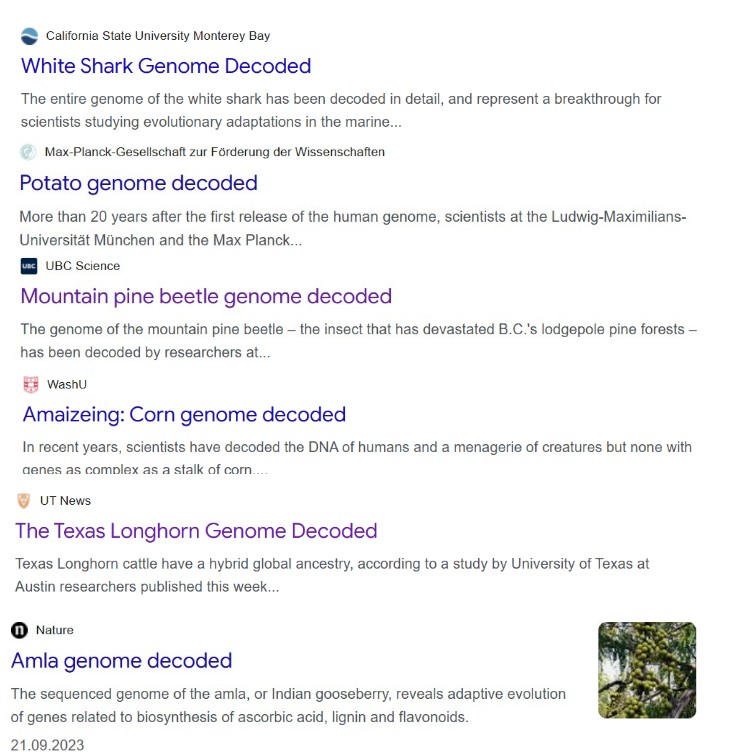
Currently, the functioning of these subconscious psychological mechanisms can be recognised in seemingly random semantic errors. For example, the uncontrollable complexity of the interwoven information accumulated and stored in the genomes of living beings over many millions of years of evolution is obscured by false public reports that humans can ‘decode’ entire genomes. Here, the term ‘decoding’, which would imply the recognition of all stored information, is confused with the actually correct term ‘sequencing’. However, this term only refers to the mere reading of the nucleotide sequences in the genome without any reference to the decoding of the information contained therein. And that is pretty much all that has happened. The alleged decoding of entire genomes once again suggests that humans can control living nature (which is impossible in reality). The following illustration shows just a few of many possible examples of supposedly random semantic errors made by established research institutions or scientific journals:
Research on the HIV virus, which causes AIDS, is a good example of the complexity that cannot be decoded: thousands of scientists at dozens of research institutions on five continents have been working on this tiny parasite for decades without making any real progress in truly decoding it. There have been successes in the form of symptomatic treatments for the disease. However, the volume of questions surrounding the genetic organisation of the virus has not decreased over the years, but has greatly expanded. Its genome is only about 9,700 nucleotide molecules long. The shortest DNA of organisms with metabolism is already well into the five-digit range. The complexities of the HIV virus, as well as those of all other viruses and organisms, are far too great for humans to ever be able to decipher them. It does not matter how far computing capacities or artificial intelligence may develop.
In summary, understanding the potential of a boundlessly complex ‘bustle’ striving towards infinity and ‘trial and error’ by carbon atoms with other existing elements over many millions of years opens up an understanding that, given certain conditions, this can only result in progressive dynamic self-stabilisation with a tendency towards increasingly complex, interdependent structures which, under the right conditions, can extend to those that function like life. These chemical processes probably proceed smoothly, without a sudden leap from inanimate to animate matter.
With regard to the steps following the formation of complex organic molecules, structures in the sense of organic shelters (cells) are considered the favourite. This explanation is conclusive because trial and error can continue much better inside than outside, so that the complexity of dynamic self-stabilisation – or ‘self-optimisation’ – can increase accordingly and become automatic without major disruptive factors. Without protective spaces, this increase would probably not be possible because various environmental influences would hinder the process too much or interrupt it too often. Even terrestrial viruses without a cell envelope need the cells of their host organisms for their sustainable existence.
Structures corresponding to cells therefore seem to be the logical result of the ongoing process of self-stabilisation. According to alternative proposals, porous rock could also provide suitable protective spaces. However, these would have some fundamental disadvantages compared to organic structures.
It is not unlikely that the cellular structures observed on Earth are an optimum to which the process of progressive life development stabilises. And this can also be assumed for many other results. For example, the ‘genetic code’, which functions in the translation of nucleotide sequences from single strands of RNA into amino acid sequences of proteins, is the same in almost all life forms. The evolutionary logic of automatic optimisation processes with potentials of complexity tending towards infinity leads, with a high degree of probability, to results that are always approximately the same.
Part 4: It is highly probable that the universe is permeated by a large number of ecosystems with the same natural laws.
Now, it is still unclear how often life could exist outside our planet Earth in the observable universe. Since its emergence can be assumed to be an automatic process, the question can be replaced by that of the frequency of rocky planets and rocky moons on which the necessary conditions are present. Our solar system provides a basis for estimation. The Sun itself is a yellow dwarf star, which is average in terms of size, brightness and heat. Based on data from telescopes, the number of planets can also be assumed to be approximately average, at least in our galaxy, the Milky Way.
Liquid water at great depths is probably most conducive to the emergence of life. One reason for this is protection from cosmic radiation, which could disrupt the processes of forming increasingly complex and stabilising structures. So the next question would be: How often has there been or is there liquid water at great depths on rocky planets and rocky moons in our – average and therefore exemplary – planetary system? Based on data from telescopes and probes, the answer is: frequently to very frequently. It has been proven that a number of the rocky moons orbiting the gas planets Jupiter and Saturn currently have large oceans of liquid water beneath their ice crusts. These seas contain liquid water masses that are many times larger than all the water on Earth. They are probably very old and up to over 100 kilometres deep. Stable energy is certainly available – otherwise they would not be liquid beneath the ice shells. [2]
The seriousness of the assumptions that at least some of these oceans contain life and ecosystems is evident, among other things, from the fact that unmanned space probes have been sent to the moons for decades. These included the scientifically groundbreaking Galileo probe, which was the first to detect liquid water beneath the ice shells of three of Jupiter’s moons (Europa, Ganymede, Callisto). Two probes from the EU (JUICE, ESA) and the USA (Europa Clipper, NASA) are currently on their way and are expected to arrive at the moons in 2030 and 2031. Significant financial resources have been invested in these projects, and the central goal is to find evidence of extraterrestrial life. Many researchers are optimistic that this will be achieved, at least indirectly, by means of the probes.
There are several potential sources of energy for the oceans beneath the ice shells of rocky moons or even rocky planets in the observable universe. These include the residual internal heat of the hot bodies during their formation and the resulting volcanism. For planet Earth, too, it is widely assumed that the first cell structures arose in the depths of the primordial ocean at volcanic vents. Another major source, especially on moons, is the tides: under the influence of the gravitational forces of their planets, the moons are steadily ‘kneaded’, generating uniform frictional heat. Other potentially stable energies could come from radioactive processes. Finally, combinations of several of these and other energy sources are possible. Some astroscientists in the relevant fields of research consider it not unlikely that some of the water masses of Jupiter and Saturn’s moons are home not only to single-celled life, but also to much more complex multicellular organisms. [3]
The assumption that life in liquid water is highly likely to be a common phenomenon in the observable universe and that it does not have to be confined to so-called habitable zones within planetary systems can therefore be considered well-founded. For if there are numerous rocky moons in our solar system that harbour oceans of liquid water beneath a layer of ice, then this is likely to be true for most other similar planetary systems or to have been true at some point in their history. With regard to the history of our solar system, various traces indicate that it is likely that many more oceans existed on planets and moons, which have disappeared over the course of billions of years. Water is now believed to be a very common chemical compound in the observable universe.
However, according to numerous public statements, a question of particular interest to many people is how often life could exist above water, on land and under a life-friendly gas atmosphere – similar to that on Earth. This would indeed require basic conditions similar to the usual definitions of habitable locations. This is because the possibility of liquid surface water is considered to be their main characteristic. And without such water, an Earth-like situation is not logically conceivable. This point has so far been the basis for a prevailing opinion that the conditions on Earth must be quite rare or even very rare. However, this view is now changing. Both the frequency of rocky bodies in habitable locations and the probability of the formation of life-friendly atmospheres are now estimated to be much higher than they were just a few years ago. The presumed history of the formation of planet Earth provides another reference point here.
According to the prevailing majority opinion, the planet formed around 4.6 billion years ago (in terms of today’s Earth years) during the formation of the solar system, when a cloud of dust and gas consisting of various elements contracted under the influence of gravity. And according to this theory, around 3.8 billion years ago, single-celled organisms left the first fossil traces known to us, namely certain limestone formations (stromatolites). [4]
A gas atmosphere already existed at that time. However, this was far from providing a climate conducive to life, and its components, including a high proportion of carbon dioxide, were probably not yet suitable for life on the Earth’s surface. Life therefore probably only existed in water for a long period of time. However, it was no coincidence that this changed later and a temperate atmosphere with significant proportions of gaseous oxygen developed. Instead, some of the early single-celled organisms evolved to split off the carbon contained in carbon dioxide molecules and feed on it. Since carbon dioxide is a compound of carbon and oxygen, free oxygen molecules remained as waste products.
This process began with carbon dioxide dissolved in water. But since the carbon-eating method was very successful, these organisms eventually spread to the water’s surface in numerous species. And there they also began to access the gaseous portion of the coveted substance. Thus, cyanobacteria in particular became a gigantic generator of free oxygen molecules, paving the way for today’s atmosphere.
Now the next question: Could it actually have happened that no carbon consumers had emerged among the early microbes? This is unlikely, because carbon is obviously a good and stable source of food. The evolutionary idea of using it in this way will probably arise again automatically.
The next question: How often are there rocky planets or moons with atmospheres that contain carbon dioxide? Due to a lack of sufficient data, it is not yet possible to estimate directly and reliably how high their proportion is among all planets and moons in the observable universe. But our solar system again offers indirect clues. Present-day carbon dioxide has been detected in the atmospheres of all four rocky planets in our solar system (Earth, Mars, Mercury, Venus) and in those of at least six moons. It can also be assumed that this has occurred many more times throughout the lifetime of our solar system.
It is therefore not unlikely that atmospheres similar to that of Earth will form several times during the lifetime of most planetary systems that are reasonably similar to our solar system. For the planet Mars, for example, relevant scientists consider it likely that it once had a life-friendly, temperate and water-rich surface, as well as an ecosystem above the waterline. [5]
And finally, the supplementary question about the presumed proportion of such planetary systems in the observable universe that have planets in the aforementioned habitable zones. Here, too, the majority opinion in recent years and decades has shifted significantly towards a much higher number than was previously assumed.
With regard to Earth-like rocky planets in habitable zones around yellow dwarf stars, estimates from current and recognised specialist studies range from 300 million (NASA, 2020) to six billion (Bryson et al., 2021) for our galaxy. The most important parameter for habitability in the estimates continued to be defined as the potential possibility of stable liquid surface water. Such possible habitats under the ice shells of moons such as those around Jupiter or Saturn therefore played no role. Planets around other types of stars, such as the particularly common red dwarfs, were also not taken into account. Meanwhile, the latter are sometimes attributed with high potential, with some estimates suggesting that up to 50 per cent of red dwarfs could have Earth-sized rocky planets in their gravitational fields that could exist in habitable zones (Dressing & Charbonneau, 2015).
Many other findings could be reflected upon, which, when combined, lead to the logical conclusion that the observable universe must indeed be teeming with life. The majority of ecosystems will be found in liquid water. However, life that also occurs above the waterline in suitable gas atmospheres is also likely to be common and may have existed or still exist in a large proportion of the planetary systems in the entire observable universe.
The assumption that life on Earth is something extraordinary and rare is probably similar to a situation in which one points a fixed microscope at a forest floor, happens to focus on a single microbe, and then thinks: ‘What an incredible coincidence that we discovered it here, when something like this is surely very rare or even unique!’ The fact that the forest floor is teeming with countless microbes is not immediately apparent. The main reason why no empirical evidence of life beyond Earth has been found to date is obviously the size of the universe, with spatial distances posing a considerable obstacle to observation outside our planet.
We at the ZEIS Institute for Ecological Education assume that within the next ten years, the evidence for extraterrestrial life will become much more compelling or even be directly proven. This could happen, for example, through investigations using the aforementioned probes or indirectly through refined telescope-based spectral analyses. However, this alone will not break down the repression complex that has so far blocked scientific research into the fundamental ecological laws of nature. To do so, the uncontrollably high complexities of the ecological structure, including all organisms and their genomes, would first have to be recognised and accepted on the basis of life on Earth. As explained, this is the real key to understanding the ecological laws of nature.
Recognising the uncontrollable complexity of organic life systems and the ecological laws of nature that inevitably and without exception always apply would open up a field of fundamental connections in physics that has remained untapped due to the aforementioned repression. For researchers who venture into this field without hesitation, there are opportunities for pioneering achievements that could potentially one day be ranked alongside those of the most famous names in all of natural science. However, this will only be possible if humanity, in its ignorance, does not first destroy large parts of the Earth’s ecosystem and thereby drag itself into the abyss.
[1] https://cordis.europa.eu/article/id/202465-selfreplicating-molecules-provide-clues-to-how-life-may-have-begun/de
[2] https://science.orf.at/v2/stories/2935957/
[3] Jonah Peter et al. (Harvard University, Nature Astronomy, 2023) “Detection of hydrogen cyanide and other nitriles in the plume of Enceladus”
[4] https://www.phoenix.de/geschichte–des–lebens–a–140870.html
[5] https://www.br.de/nachrichten/wissen/war-der-mars-einst-bewohnbar-nasa-rover-liefert-neue-hinweise,UjH2cWR